





A local information card can look finished while carrying one dangerous error. The town name is almost right, the date is plausible, and the number fits neatly inside the design. Those qualities make the mistake harder to catch. A reader does not see a draft generated from a prompt; the reader sees a polished public claim with the visual authority of a newsroom.
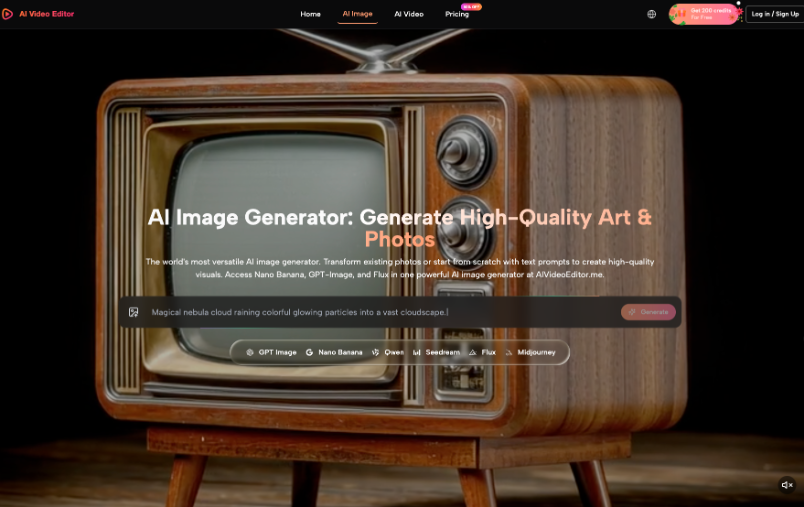
Improved image text is useful, but it changes the review problem rather than removing it. Nano Banana AIKimg can help a small editorial team explore a multilingual visual, while Kimg AI provides a browser workflow for prompting, image input, and model choice. The publication decision still belongs to a copy sheet that exists outside the pixels. Legibility answers whether people can read the card. Verification answers whether they should trust it.
Fluent Lettering Can Hide a Wrong Public Claim
Older generated lettering often announced its failure with nonsense. A broken word was ugly, but it was easy to reject. More capable text rendering creates a subtler risk: the line can be grammatical, aligned, and visually consistent while differing from the approved wording by one character. A changed place name, transposed date, or rounded figure may survive a quick visual scan.
Local reporting magnifies the consequence. Nearby municipalities may have similar names. A road closure can apply to one segment rather than a whole route. A public meeting time may change after the first card is designed. When generated text is embedded in the art, a small correction may require another generation and may disturb other parts of the image.
The first safeguard is procedural: treat every generated letter as unverified, even when it looks excellent. Apply the same discipline used for a typed caption, a chart label, or a lower-third graphic. Presentation quality never becomes source evidence, regardless of the model's general ability.
Lock Four Fields Outside the Generated Pixels
Create a copy sheet before opening an image tool. It should contain the exact headline, every number, every place name, and the publication date or time reference. Give each field an owner and a source location. If the source changes, update the sheet first. The visual is downstream of that record.
Keep the sheet plain. A shared document or newsroom card is better than a screenshot because editors can search, compare, and copy exact strings. Add the language variant beside the original when a local edition needs both Italian and another language. Translation review happens in the sheet, not while admiring the generated layout.
Separate Verified Copy from Decorative Letterforms
Not every letter-like shape carries a claim. A blurred poster in a background can be removed or abstracted. A headline, price, warning, route number, address, or date must match the copy sheet exactly. Mark those items as claim-bearing before generation so the designer knows which regions deserve character-by-character inspection.
For high-risk service information, the safest route is often to generate the illustration without factual copy and add the approved words in a layout tool afterward. Generated lettering is more defensible when the words are short, stable, and easy to compare. The workflow should choose the lower-review route, not chase text inside the image merely because the model can attempt it.
Run a Four Field Transcription Audit
When text inside the generated image serves the design, inspect it in a fixed order. Do not begin with overall taste. Open the copy sheet beside the full-resolution output and check one field at a time:
Read the headline aloud and compare every word, accent, apostrophe, and line break.
Circle every number, including dates, times, percentages, route numbers, and prices.
Compare every place and organization name with the approved spelling.
Confirm that the visual date or time context matches the planned publication window.
Use a second person for the final pass when the card directs public behavior. The first editor already knows what the line is supposed to say and may read the intended phrase into a near match. The second editor should receive the image and copy sheet without the prompt. That cold comparison is slower than a glance and much faster than correcting a circulated graphic.
Kimg AI can support this loop by keeping the image creation step in one workspace, but the audit should remain independent of the generation history. The reviewer needs the final pixels and approved copy, not the persuasive story of how the image evolved.

Inspect Meaning After the Characters Match
Exact transcription is necessary but incomplete. Placement can change meaning. A date beside the wrong event block, a figure under the wrong category, or a locality label pointing at the wrong area can all be spelled correctly and still mislead. After the character pass, read the entire card as a first-time viewer and state each claim in a sentence.
If two careful readers state different claims, the layout has failed even when every word matches. Move the copy, simplify the image, or separate the claims into distinct cards. Ambiguity is a publishing defect, not a style preference.
Fix One Text Region Without Reopening Everything
Google's official model material describes stronger multilingual text rendering and localized editing for Nano Banana Pro. Those abilities make a bounded repair plausible, but they do not guarantee that untouched regions will remain identical. Save the approved source and current output before asking for a correction. Name one region, supply the exact replacement string, and list the elements that must not change.
After the edit, rerun all four field checks. Do not verify only the corrected word. A local change can shift spacing, duplicate a nearby element, or alter a number that previously passed. Compare the old and new files at full size, then inspect the card at its real publication size. Tiny copy that is technically correct but unreadable still fails.
When one repair triggers another, stop generating and rebuild the copy in a normal layout tool. The best production decision is the one that restores a stable review path. Kimg AI is useful for the illustration and composition; it does not need to own every final letter.
Know the Limits of Generated Text Review
A transcription audit cannot prove that the underlying source is true or current. It only confirms that the image matches the approved copy sheet. Reporters and editors still need to verify the source, update late changes, and decide whether generated imagery is appropriate for the subject. Sensitive emergencies, elections, and legal notices may warrant ordinary typesetting and documentary visuals instead.
Publish From the Approved Copy Record
For a routine explainer, the publication folder should end with four things: approved copy, the composed visual, a completed field audit, and the exact exported file. Save the version that was actually reviewed; a later download should not silently replace it. That boundary lets a local newsroom use Kimg without confusing visual fluency with editorial verification.
The model may improve how information looks. The copy sheet, cold read, and named editor determine whether the information is ready to carry the newsroom's authority. Keep those records together, and a correction remains a controlled editorial act rather than another round of visual guesswork.
Informazioni fornite in modo indipendente da un nostro partner nell’ambito di un accordo commerciale tra le parti. Contenuti riservati a un pubblico maggiorenne.