


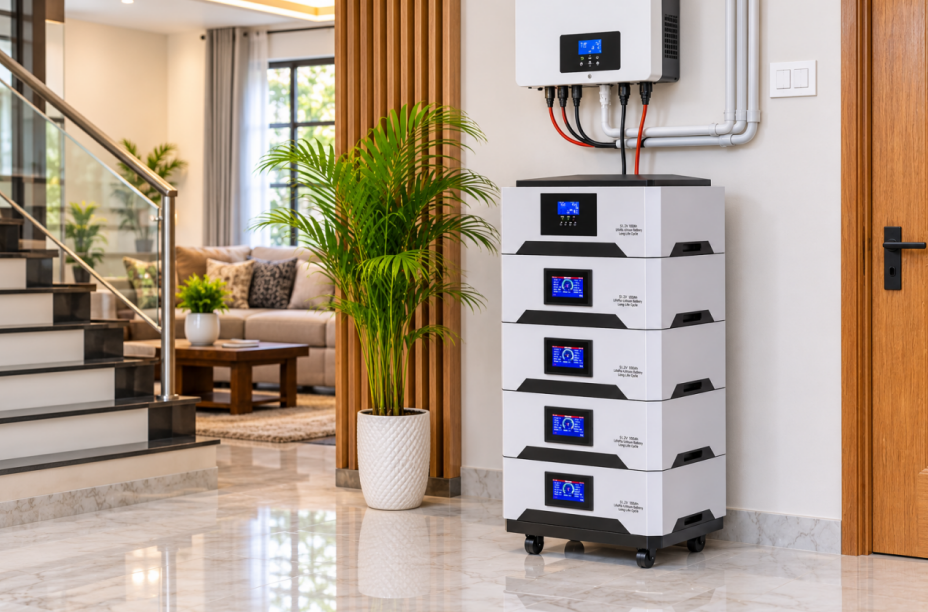
Residential battery demand can create opportunities for local solar installers, but expanding from a handful of systems to repeat home projects changes the procurement challenge. A battery that suits one property may not fit another inverter, installation space or operating profile. At higher volumes, inconsistent specifications, missing documents or uncertain delivery schedules can also disrupt commissioning and customer commitments. Installers therefore need to assess more than price and advertised capacity.
A reliable procurement process connects supplier capability, model-specific evidence, system design, safety and after-sales arrangements. In Italy, it must also account for applicable European product obligations and national grid-connection requirements before specifying or installing equipment.
Why Solar Storage Procurement Matters When Installers Scale Residential Projects
A single residential installation can often be managed through direct communication between the installer and supplier. Scaling introduces more variables: different roof systems, household load profiles, inverter brands, installation locations, and commissioning dates. If product specifications or delivery arrangements change between orders, teams may need to redesign systems, revise quotations or delay work. Procurement becomes part of project quality, not simply a purchasing task.
A repeatable approach helps installers define approved battery models, document technical assumptions and compare suppliers against consistent criteria. It also makes customer proposals more realistic because capacity, usable energy, power limits, and warranty conditions are checked before contracts are signed. The goal is not to standardize every home, but to standardize how each project's requirements are assessed.
What to Evaluate Before Choosing a Wholesale Battery Supplier
Assess a supplier's ability to support repeat orders, not just its first quotation. Compare suppliers on four practical points:
● Production capacity for repeat orders.
● Minimum quantities and confirmed lead times.
● Consistency of model and configuration.
● Notice of revisions, substitutions or delays.
An installer comparing wholesale home energy storage battery suppliers should request model documentation, clear commercial terms, and a route for technical questions. Check warranty responsibilities, shipping arrangements and procedures for damaged units. A low unit price may prove costly if unclear specifications or weak support cause rework, extra site visits or customer disputes.
Which Battery Documents Should Installers Verify Before Bulk Orders?
Documentation must identify the exact battery model. Before bulk orders, request:
● Current datasheet and installation instructions.
● Safety information and warranty terms.
● Model identification and traceability details.
● EU Declaration of Conformity and technical file.
● Applicable test reports and UN 38.3 summary.
Check that ratings and labels match the supplied configuration.
Regulation (EU) 2023/1542 sets obligations for manufacturers and importers, including conformity assessment, technical documentation, CE marking and required information. A general certificate image does not establish compliance for every model. Importers must verify the obligations applying to their role; installers should obtain model-specific evidence from the responsible economic operator before specifying equipment.
How to Check Battery and Solar Inverter Compatibility
Nominal energy in kilowatt-hours describes stored energy; it does not prove inverter compatibility. Check the complete electrical and communication profile:
● Nominal and operating voltage range.
● Charge, discharge and peak-current limits.
● Continuous power and supported battery profile.
● CAN or RS485 compatibility and firmware.
Confirm the exact model combination rather than inferring compatibility from a connector or protocol name. Ask both manufacturers to verify the pairing, parallel-operation limits and commissioning steps. Compare household loads and solar generation with the battery's power limits. A system may have sufficient stored energy yet still be unable to supply a property's peak demand.
Wall-Mounted vs. Stackable Batteries for Residential Projects
Wall-mounted and stackable designs address different site needs. A wall-mounted unit may save floor space where a suitable load-bearing surface exists, but installers must check dimensions, weight, mounting requirements, clearances and service access. Stackable systems can support staged capacity planning, although floor area, module handling, cabling and permitted stacking arrangements still require site assessment.
Avepower publishes a 51.2V, 100Ah wall-mounted LiFePO4 battery rated at 5.12kWh nominal energy. Its stackable family is marketed in 5kWh, 10kWh and 15kWh configurations, using approximately 5kWh modules. A stackable battery may simplify staged planning if the complete system meets inverter and installation requirements. The calculation 51.2V × 100Ah equals 5.12kWh, so distinguish this from the rounded 5kWh product designation.
Battery Safety and Installation Conditions That Require Attention
LiFePO4 chemistry is used in stationary storage, but it does not remove the need for a site-specific safety assessment. Follow the manufacturer's instructions for operating temperature, mounting, spacing, enclosure protection, and permitted locations. Assess isolation, overcurrent protection, cable sizing, earthing and inspection access. Never assume a cupboard or utility room is suitable without checking the battery's installation requirements.
A battery management system monitors operating conditions and provides protective functions, but cannot replace correct design or maintenance. Consider heat, moisture, impact, ignition sources and emergency access. Italy's Fire Brigade has published fire-prevention guidance for photovoltaic installations. Check its scope and the rules that apply to the particular building; do not treat a general checklist as a substitute for a project-specific assessment.
Italian Grid-Connection and EU Battery Compliance Considerations
For an Italian grid-connected home system, coordinate battery procurement with inverter selection and the connection design. CEI 0-21 concerns low-voltage connections; CEI 0-16 applies to medium-voltage connections. Applicable editions and documentation depend on the installation and connection point. Check current requirements and the distribution system operator's procedures before finalizing equipment or commissioning plans.
The GSE states that storage systems must follow relevant CEI standards and the national regulatory framework. Depending on the project, connection, metering, registration or incentive procedures may also need review. A battery's CE marking does not establish that the complete photovoltaic-plus-storage installation is ready for grid connection. Verify product conformity separately from system design, installation declarations and connection approval.
Regional Installation Requirements and the Piemonte Context
Italy's national framework should be the starting point, but project scale, location and configuration can affect administrative requirements. Installers should identify whether a project is an ordinary behind-the-meter residential system or falls within a different authorization category. Where a project is unusual, larger, standalone or designed to provide services to the grid, seek advice from the competent authority and check the relevant regional and national procedures before procurement.
Piemonte approved operational guidelines in July 2025 for authorization applications involving specified electrochemical or thermomechanical storage systems, including standalone systems within the scope described by the regional decision. These guidelines should not be presented as an extra permit requirement for every household battery. Their relevance depends on the system's legal classification and project characteristics. Check the regional decision and current competent-authority guidance when a project may fall within that scope.
How to Assess Supplier Continuity, Warranty and Technical Support
A supplier relationship must remain workable after delivery. Ask how warranty claims are submitted, what evidence is required, who pays return transport and how replacements are handled. Clarify commissioning support, response arrangements and spare-parts access. Record agreed responsibilities rather than relying on informal sales assurances.
For repeat projects, ask how the supplier manages firmware updates, component substitutions, product revisions and end-of-life notices. Changes can affect compatibility, training and approved designs. Review lead-time commitments, shipping responsibilities and packaging standards for the destination market. Clear communication about limitations is more useful than an unsupported promise of uninterrupted availability.
Building a Repeatable Procurement Process Before Scaling
Before placing larger orders, test the process on representative installations. A pilot should verify:
● Battery and inverter pairing.
● Documentation and packaging condition.
● Commissioning results and installer feedback.
● Any changes needed to approved procedures.
Use a supplier scorecard covering technical fit, document completeness, consistency, delivery, warranty handling and communication. Reassess it when a model or supplier changes. Keep records linking each battery's model and serial number to its datasheet, conformity documents, inverter settings and commissioning results. This makes future installations easier to verify and manage.
Conclusion
Successful scaling of residential storage depends as much on disciplined procurement as on product selection. Installers should verify model-specific documentation, confirm inverter compatibility, assess the installation site and understand the Italian connection and authorization requirements that apply to each project. They should also evaluate suppliers for repeat-order consistency, warranty handling and practical technical support, not just headline price.
Avepower publishes wall-mounted and stackable LiFePO4 storage options and offers wholesale and OEM/ODM services for business partners. Installers and distributors can explore its solutions and discuss project-specific configurations before making a purchasing decision. A measured process protects installation quality as project volume grows and sets clearer expectations for customers.
FAQs
What should solar installers check before choosing a battery supplier?
Solar installers should evaluate product specifications, manufacturing consistency, compliance documents, warranty terms, inverter compatibility, delivery reliability and technical support.
Why is inverter compatibility important when purchasing solar batteries?
Inverter compatibility ensures that battery voltage, charging limits, discharge current and BMS communication work correctly with the selected solar energy system.
What is the difference between wall-mounted and stackable solar batteries?
Wall-mounted batteries are designed for fixed installation on suitable surfaces, while stackable batteries allow installers to configure storage capacity using multiple compatible modules.
Which documents should installers request when buying LiFePO4 batteries in Italy?
Installers should request model-specific datasheets, applicable EU Declarations of Conformity, CE documentation, safety instructions, warranty details and relevant UN38.3 transport documentation.
Why should solar installers evaluate battery suppliers before scaling residential projects?
Evaluating suppliers helps installers maintain consistent product quality, manage repeat orders, reduce compatibility problems and establish reliable technical and after-sales support.


 SU